
Postcards from the Field

Stories and Insights from SZ4D Field Trip Participants
The 2026 SZ4D Mt. Hood Pilot Project brought together 30 participants from 10 countries and across disciplines and career stages for a 10-day field investigation of interacting geohazards in the Mt. Hood volcanic region.
The team investigated a range of questions, from the extent and composition of deposits from Mt. Hood’s 1781 “Old Maid” eruption to sediment transport and remobilization along the White River. Participants also investigated Quaternary faults, collected samples for geochronological analyses, and used drone surveys, LiDAR, dug boreholes, and collected field measurements to build new datasets. Together, these efforts will advance understanding of Mt. Hood’s volcanic, sedimentary, and seismic hazards - and generating new questions for future research.
Read Chloe Anderson’s (University of Washington) recap of the 2026 SZ4D Mt. Hood Pilot Project for a closer look at the science, discoveries, and collaborations that emerged from ten days in the field.
The field trip brought together researchers from different disciplines and career stages, creating opportunities to explore questions and approaches that participants may not have encountered in their usual research environments. Working side by side, participants shared their expertise, learned from one another, and developed new science in a highly collaborative, interdisciplinary setting. This kind of exchange is at the heart of SZ4D and the Pilot Project model.
But what is it like to be part of that experience? We asked participants to share a few reflections from their time at Mt Hood. Here are their Postcards from the Field.

Field Trip Organizers
Leif Karlstrom - University of Oregon
Adam Kent - Oregon State University
Ian Madin - Portland State University
Brian Yanites - Indiana University
Team Members
alphabetical order
Chloe Anderson (University of Washington); Nathaniel Bergman (University of Haifa); Matthew Blackett (Coventry University); Joaquin Bucher (CONICET – National University of La Plata); Priyanka Dhamala (Michigan Technological University); Micaela Garcia (CONICET – National University of La Plata); Natália Gauer Pasqualon (University of Hawaiʻi at Mānoa); Luke Gezovich (Colorado School of Mines); José González-Alfaro (University of Chile); Hima Hassenruck-Gudipati (Southern Oregon University); Omar Hernández (University of Nevada, Reno); Pilar Jeanneret (IANIGLA-CONICET); Roberto Ledda (Roma Tre University); Wilford David Loaiza-Escobar (Colombian Geological Survey); Wilman Navarrete (Université de Lille); Mattia Pistone (University of Georgia); Isaac Pope (Missouri University of Science and Technology); Jane Hannah Scarrow (University of Granada); Atiya Simon (Cascadia Region Earthquake Science Center); Alexander Sodeman (Willamette University); Rachel Teasdale (California State University, Chico); Stacy Yager (IU Indianapolis); Emily Brodsky (UC Santa Cruz); Claire Ruggles (University of Wisconsin-Madison)
José González-Alfaro
Postdoctoral Researcher
University of Chile
Hello! My name is José González-Alfaro, geologist and postdoctoral researcher in the Department of Geophysics at the University of Chile. My research focuses on the microseismicity and Quaternary faulting of the Puerto Aldea Fault, located in coastal central-northern Chile.
In the Chilean subduction zone, several surficial processes occur linked to the interaction of tectonic plates. That’s why I found it an excellent opportunity to participate in the 2026 Mount Hood Field Trip — to figure out which are the most important processes occurring in the Cascade subduction zone and then compare the similarities and differences with the Chilean case. Being able to visit another subduction margin on a field trip is something I’ve always wanted to do.
The experience at Mount Hood was pure science! In the field we applied several methods to try to understand the different processes linked to volcanic activity, such as the description and mapping of volcano pyroclastic geological units, in-situ fluvial grain-size measurements, digging soil boreholes through fault scarps, and drone image acquisition. At the end of each day, we always finished with lots of scientific discussion about what we had seen in the field and by presenting our work to each other. For sure, this experience will be useful for the fieldwork I’ll be doing in Chile.
I would like to thank the PI of the SZ4D project, Emily Brodsky; the field-trip organizers; the logistics team; and all the participants for sharing their expertise and experience with me. I also want to thank the National Science Foundation AccelNet program (award 2301732).
.jpg)
Matthew Blackett
Associate Professor
Coventry University
Wow - what a brilliant trip I’ve had. We’ve spent the last week exploring so many fascinating sites around Mount Hood and I have learned so much. I had not looked at a rock with a lens in more than 10 years and it was great to be re-introduced to it all by experts in the field. I also knew very little about debris flows and now feel that I could start research on them. I realise how much I miss fieldwork.
But for me the highlight was, without doubt, working with an incredible international group of scientists. We had time to chat about our research, to inspire each other, to offer advice and support and to make plans for future collaborations. I have no doubt that we’ll all stay in touch, both in a professional and personal capacity. I’m already planning a trip to South America.
Thanks so much for the opportunity.
Matt
.jpg)
Rachel Teasdale
Professor
California State University, Chico
The SZ4D Mt. Hood field workshop was fantastic, thank you all for putting it together.
From the very start, this trip was well organized and ran smoothly because of the way you thoughtfully organized all aspects of the trip. The group of participants you put together worked very well, with an exciting combination of disciplinary expertise and a broad array of participants from different career stages. Not only did you put together this diverse group, you also artfully constructed opportunities for us to work together in ways that facilitated participation from everyone. Throughout the trip, we learned from each other and input wasn’t prioritized for more senior people as experts. On some occasions (e.g. when we were asked to get into groups), the group did become somewhat chaotic, but with your patience and a bit of time, an organization emerged that allowed participants to gather information and make decisions that resulted in productive working groups. I noticed an outside observer who watched this, shake his head in disbelief as he exclaimed that it worked- and it did!
Open opportunities self-determination and participation included one of my favorite aspects of the trip, which were the group discussions at the end of field days. In these sessions, we shared what we learned after working in groups during the day, which helped put our small group fieldwork into context. These debriefs/report outs really helped me contextualize the bigger picture of what I had done during the day. For instance, one day I worked with other participants (a group of 5 who had a wide range of professional experience and were from 5 different countries) characterizing the surge deposits. That evening we learned about the work of other groups who had similar goals that day, and also from groups with seemingly very different goals such as collecting infiltration data and glacial deposits. Their reports helped give me perspective on the transition from surge deposits to debris flows, which helped me contextualize the data we collected across the debris flow in subsequent field days. This broader understanding helped engage my interest and curiosity and led to deeper learning than I would have had otherwise. In a couple cases, the debrief sessions didn’t appear to be on the daily agenda, but when participants requested a group discussion, the trip leaders made sure to make minor schedule adjustments to make time for them.
This is just one example of many learning organizational features and learning opportunities in the Mt. Hood field workshop. In addition to learning a lot of geology, I also learned a lot about group dynamics and organization as well as important lessons in giving participants lots of autonomy and planning enough flexibilities so a trip like this can be nimble enough to adjust the schedule to enhance learning opportunities.
Thank you again for your organization and leadership during the trip, it was a wonderful experience!
.jpeg)
Wilford Loaiza Escobar
Volcanic Monitoring Analyst
Colombian Geological Survey
Hi! I am a Geologist and Volcanic Monitoring Analyst at the Manizales Volcanological and Seismological Observatory where I work on seismic monitoring of active volcanoes in the Colombian Andes. I decided to apply to the SZ4D Mt. Hood Pilot Project to observe subduction zone geohazards firsthand, learn new technical approaches, and connect with international researchers working on similar geological challenges. This field trip was a transformative experience for both my personal and professional growth. I gained hands-on experience with new field methodologies while drawing parallels between the Cascades and my daily monitoring work in the Andes. Seeing how science is conducted in different parts of the world completely broadened my horizon.
Beyond the field techniques, the human connections were invaluable. Building relationships with a welcoming, world-class community of scientists exposed me to diverse ways of thinking and opened doors for future collaborations. Sharing knowledge, discussing methodologies, and working together in demanding field conditions built a network that will shape my career for years to come.
Most importantly, this experience gave me a much-needed perspective on my future path. It helped me sharpen my scientific interests, showed me how my technical skills in data analysis and monitoring fit into global geosciences, and gave me clear motivation as I prepare for graduate studies. I am deeply grateful for everything I learned and the people I met, and I look forward to participating in many more collaborative projects like this in the future!
.jpeg)
Isaac Pope
PhD Candidate
Missouri University of Science and Technology
Hello everyone! Isaac here – it’s been an amazing trip to the beautiful (yet secretly dangerous!) Mount Hood. I’ve always been amazed by volcanoes and fascinated by the challenging question of how communities can safely live in their shadows. It’s not an easy question, and requires many perspectives to address it. That is why I have been so privileged to be part of this trip.
Almost thirty scientists from a half dozen countries came together to address this truly global problem. Together, we visited some mind-boggling sites and put together strategies for pushing forward the next frontier of science to keep our communities safe. There is nothing like doing real-time scientific research in the field, where graphs and maps come alive in all the hues that make this problem such a persistent challenge. This has been one of the most unique opportunities of my education and training as a geoscientist. Working with brilliant minds that come across the world and represent a host of disciplines has provided an unparalleled experience. This has been one of the most unique opportunities of my training thus far, and I am thrilled to continue learning from and working with the amazing participants this venture brought together.
.jpg)
Natália G. Pasqualon
Postdoctoral Researcher
University of Hawaii at Manoa
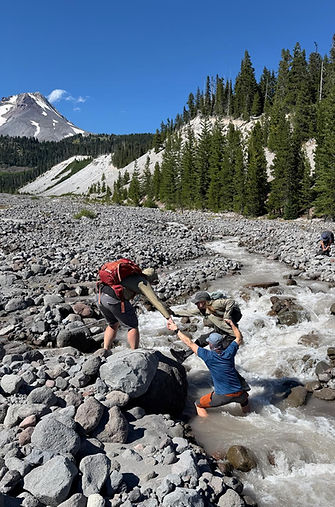
My name is Natália, I am from Brazil, and I am currently a postdoctoral researcher at the University of Hawaiʻi at Mānoa, working with the eruption dynamics of Kīlauea Volcano. As my first time visiting volcanoes in the Cascades, I arrived with very high expectations, and it was honestly the best experience I could have hoped for. Stratovolcanoes are far more complex systems than shield volcanoes, and the trip changed my perspectives on volcanic hazards and volcano-sedimentary interactions. That was the first time I thought in detail about block-and-ash flows and their different components (dense vs. dilute portions) and being on this trip considerably contributed to my formation as a volcanologist; I also truly enjoyed participating on other disciplines activities, such as the sediment analysis in the White River. While pebble counts on riverbeds are not part of my own research, they gave me a much greater appreciation for the work of scientists in other fields. I also learned new tools and approaches that can be directly applied to volcanology, for example, using drone imagery to analyze grain-size distributions. It was exciting to realize how methods developed for one area of Earth Science can inspire and strengthen research in another.
The landscapes and geology were incredible, but what made the trip especially meaningful was the connections made with outstanding scientists from all over the world. The trip opened doors for new collaborations and friendships with scientists from South America, Europe, and different parts of the United States. The cultural richness of the group was amazing! I also really valued the organization and dedication of the leaders and staff and all their efforts to make the trip happen. Another highlight of the trip is that participants were of different career stages. I had opportunities to share advice and experiences with others, while also receiving incredibly valuable advice myself from people in more advanced career stages. Bringing together people with such different backgrounds, perspectives and paths in science made the entire field experience even more special and memorable. I hope I can continue involved in the projects started in the field and come back to Mt. Hood again soon!
.jpg)
Luke Gezovich
Postdoctoral Researcher
Colorado School of Mines
The SZ4D 2026 Cascadia Pilot Project at Mount Hood was an incredible 10-day experience. This was my first opportunity to work alongside a large, diverse group of 27 scientists spanning various career stages and specialties, including volcanology, petrology, sedimentology, and remote sensing, each of us bringing our own unique perspectives and experience to the table. I personally gained such valuable experience linking newly learned volcanic processes to surface processes and landscape evolution.
Being in the field as a group, collecting new data, and learning from one another proved invaluable. The dynamic volcanic terrains created a unique laboratory for sparking interdisciplinary research ideas and collaborative projects. There are several projects I am now collaborating with others, plus a few ideas of my own I'm excited to develop.
In addition to the science, my highlight was the professional connections and lasting friendships I made along the way. I have especially fond memories of our hikes repeatedly grinding to a halt because someone had spotted an interesting geological feature, turning the trail into an impromptu outdoor seminar as the whole group gathered to discuss and learn. Since the workshop ended, we've all made a point of staying in touch, and I'm excited to keep collaborating with this group on our ongoing work and future initiatives.
Attached is a photo of us with the "Miguel-mobile" – I'll definitely miss those car rides with everyone!
.jpeg)
Pilar Jeanneret
Assistant Researcher
IANIGLA-CONICET
My name is Pilar Jeanneret, I am an early career researcher from Mendoza, Argentina. I work in high mountain geomorphology in the Arid Andes where volcanoes are not a thing. But volcanoes are the reason I studied geology so I am slowly shifting my focus on the cascading hazards involved in high mountain environments including volcanic hazards. The SZ4D Mt. Hood Pilot Project was an excellent opportunity to apply my knowledge in an unfamiliar place with an interdisciplinary group of amazing scientists and passionate students. I was not only listened to and valued for my expertise in glacial chronology and landslides, but I also learned a lot through the seminars, the fieldwork, the team leaders and all the participants that shared their knowledge to everyone. I left Mt. Hood with a baggage of new information that I am eager to apply in my research field and a network of researchers and students from around the world with whom I share the same passion for volcanoes and volcano-related hazards.
.jpeg)
Micaela García
Assistant Researcher
Centro de Investigaciones Geológicas, CONICET – National University of La Plata
Hi! I am Micaela García, researcher at CONICET and the National University of La Plata, Argentina. What surprised me most about the Mt. Hood field trip was how quickly the organizers and participants created an open and collaborative environment. Everyone was encouraged not only to contribute to the discussions, but also to take an active role in developing new research projects.
I was fascinated by the similarities between some of the processes we observed at Mt. Hood and those preserved in the geological record of areas I study in Argentina. Sharing perspectives and learning new field methods from colleagues across different disciplines gave me new ideas for my own research and led to new collaborative projects at Mt. Hood.
I returned home with new scientific questions and collaborations, but also with an incredible group of friends from around the world. That combination of science, generosity, and friendship is what made this experience so meaningful to me.
Thank you again for such a wonderful experience and for creating such a welcoming and collaborative environment throughout the trip!
.jpg)
Roberto Ledda
Master Student
Roma Tre University
My name is Roberto Ledda, I am a Master Student in Universita degli Studi Roma Tre, in Italy. I am currently studying in a Tectonics and Volcanology curriculum and I have just finished my Erasmus experience and I am ready for what new is coming this year. I feel very lucky for having participated in the 2026 S4D Mt Hood Field Trip as it just turned out to be the most incredible, amazing and crazy 10-days field trip experience I ever had. First time participating to real research project, I had no idea what I was going to deal with. I am totally surprised by whatever I found, starting from an extremely stimulating scientific and human environment, passing through the wonderful landscape of the volcano, able to arouse a huge curiosity and an infinity of new scientific question, and the new not-only-scientific things I could learn everyday, arriving to the amazing people I have met, with who I could establish fantastic connections and start my first collaboration. I was lucky enough to meet a group of people with whom I immediately formed a personal connection, and although I didn’t realise it at the time, the work that followed felt like the natural continuation of these new friendships. This helped a great many people to create an environment in which to learn and absorb the new techniques and methodologies that I’ve taken home with me, such as grain size analysis, transects along the river, the fracture patterns in a lava flow, the creation of 3D models from photographs, and the use of a new piece of software, Strabospot, which I really appreciated for its user-friendly design. The trip leaders have inspired me to be inquisitive, to ask question and to investigate the environment on a professional level.
Then I think that the most important twist I have had has been to change my mindset from a student that learns from books to prepare an exam to a researcher that coworks with other people to solve a scientific problem and studies to better understand whatever the nature wants to tell us and to find ways to protect society
.jpg)
Joaquín Bucher
Associate Researcher and Professor
Centro de Investigaciones Geológicas - UNLP (National University of La Plata) and CONICET (National Scientific and Technical Research Council)
It was deeply inspiring to exchange ideas and learn alongside international colleagues representing diverse specialties and career stages. Analyzing block-and-ash flow deposits, lahars, and debris flows provided invaluable insights into understanding geohazards. These field observations offer a fantastic comparative framework for my own research on active and Quaternary volcanism at the Caviahue-Copahue Volcanic Complex in the North Patagonian Andes of Argentina. Exploring these dynamic landscapes up close alongside such a knowledgeable group really highlights the power of collaborative fieldwork.
Major credit goes to the field leaders and organizers for a flawlessly run trip from start to finish, and to the entire group for bringing such wonderful energy and great vibes throughout the journey. Unforgettable scientific discussions, stunning geology, and fantastic memories made along the way!
Thank you so much for such incredible experience!!!
.jpg)
Priyanka Dhamala
PhD Candidate
Michigan Technological University
Before coming to Mt. Hood, I had very little knowledge of volcanic landscapes. I applied to the SZ4D field program because I wanted to gain hands-on field experience, learn from experts, and better understand geohazards and multidisciplinary research.
Over the past 10 days, my perspective on volcanoes has changed completely. I now look at volcanoes not just as mountains, but as dynamic systems that shape landscapes and influence hazards. One of the most meaningful parts of the trip was learning how different scientific disciplines come together to study volcanic environments. Working alongside researchers from diverse backgrounds showed me how collaboration leads to a deeper understanding of Earth processes.
One of my favorite experiences was conducting field measurements with the Mini Disk Infiltrometer. Before this trip, I had never used this instrument, and learning how infiltration and hydraulic conductivity relate to volcanic deposits gave me a new appreciation for field hydrology and geologic investigations. Beyond the science, I enjoyed every part of the experience—from the long hikes to the breathtaking views of Mt. Hood. Visiting my first active volcanic environment is something I will always remember.
This field experience strengthened my interest in geohazards and volcanic systems while helping me develop new field skills, learn scientific terminology, and gain confidence working as part of a research team. It has inspired me to continue exploring interdisciplinary research and has given me valuable experiences that I will carry into my future graduate studies and career.
Thank you to the organizers, instructors, and fellow participants for making this an unforgettable learning experience.
.jpg)
Chloe Anderson
Master Student
University of Washington
My name is Chloe Anderson, I am an incoming Master's student at Idaho State University and graduating student of the University of Washington. I focus on volcanology, igneous petrology and hazards communication. The SZ4D Mt. Hood Pilot Project was a profoundly rewarding experience for me! The academic connections I made quickly became real friendships that transcended languages and disciplines. I appreciated the opportunity to learn valuable field skills from more experienced professionals, and lead my own research in a way I never could before. Volcanology is my passion; it was amazing to work so close to an active volcano in a way that supported real understanding of hazards that affect communities. My favorite part was mapping a pyroclastic surge deposits and gaining a new understanding of how to recognize these processes in the field.
.png)
Jane Scarrow
University Lecturer
University of Granada
Hola desde Mt Hood,
Thanks for the opportunity to participate in the SZ4D Cascadia Mt Hood pilot project!
The field trip combined expertise and disciplines. In 40 years of doing geological fieldwork, I have not been on a trip that had a similarly inclusive approach of inviting scientists at any career stage and of any nationality. The resulting mix of inputs from the participants was diverse and led to looking at questions arising from field problems related to volcanic hazards in a variety of innovative ways. The expertise of the trip leaders and invited contributors was a good mix that facilitated understanding the concepts and processes being studied and also sparked new ideas.
The trip has motivated me to look at volcanic hazards with a different focus. Instead of thinking mainly about the immediate impacts of an eruption, I am now much more aware of longer-term effects, particularly related to mobilisation of volcanic sediments. I will be able to use this information when engaging with communities that are vulnerable to volcanic risk because sedimentary hazards are much more prevalent in people’s everyday lives than once-in-a-generation eruptions.
In addition, I have had the opportunity to establish a collaboration with an expert in the specific field I am working in, zircon geochronology, and we have taken samples together with a view to advancing the study of the eruptive cyclicity of Mt Hood.
Finally, I now have a new network of colleagues. If I need to collaborate with a geomorphologist, glaciologist, structural geologist, or geophysicist, for example, I know who to contact.
Saludos,
Jane
.jpg)
Omar A Hernandez
PhD Candidate
University of Nevada, Reno
This field trip was an amazing experience for me. As a geomorphologist working in volcanic landscapes, it is not very common to find projects that align so closely with my research interests, so having the opportunity to be part of the Mount Hood field trip was very special. The group was very multidisciplinary and included other geomorphologists, but one of the things I enjoyed the most was having the opportunity to learn from people working in many different disciplines.
I also had a lot of fun during the trip. There were so many great moments and a lot of laughs, and I think those moments made our relationships stronger. We were not only sharing research ideas or talking about science. Sharing breakfast in the morning, having lunch together after being in the field, or just spending time talking and laughing during the van rides made the whole experience much richer. Those simple moments gave us the opportunity to know each other beyond our research and made the field trip feel much more personal.
Everyone was incredibly respectful, welcoming, and genuinely interested in each other’s research and experiences. For me, this opportunity gave me more motivation to continue pursuing my dream of working in this. But it also made me realize how exciting it is to collaborate with people from different disciplines, with different expertise and ways of looking at the same landscape. In the end, all of these perspectives complement each other as we try to understand this huge and complex system that we call subduction zones.
.jpg)
Wilman Navarrete
PhD Candidate
Université de Lille
My name is Wilman Navarrete, and I am a PhD candidate at the Université de Lille, France, originally from Ecuador. I learned about the Mount Hood Pilot Project through my research network and was immediately interested because it offered the opportunity to study active volcanic systems alongside researchers from different disciplines.
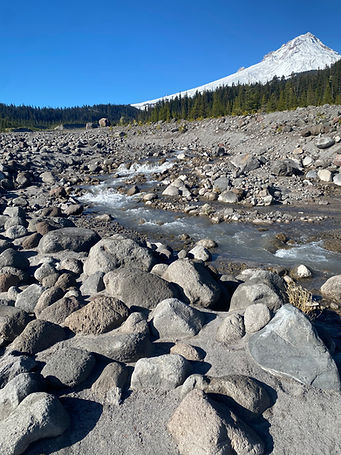
From July 20 to 29, I had the opportunity to participate in the Mount Hood Pilot Project fieldtrip in Oregon, USA. These ten days were an incredible experience, both scientifically and personally. We visited different volcanic sites around Mount Hood and the Cascadia region, where we described and sampled pyroclastic deposits, measured clasts along the White River to better understand fluvial transport processes, and collected structural measurements on lava flows.
One of the highlights of the fieldtrip was the opportunity to work with 27 participants from different universities, countries, and academic backgrounds. The group included undergraduate and graduate students, PhD candidates, postdoctoral researchers, and professors, creating a collaborative environment where everyone contributed different perspectives and experiences. Discussions in the field and during the evening sessions made every day a valuable learning opportunity.
For me, this experience will have a direct impact on my PhD research. My work focuses on volcano-sedimentary basins in the Western Alps, and many of the field methods and observations from this trip can be applied to my own research. It also gave me new ideas that I can use in my collaborations in Ecuador, particularly in studies of volcanic deposits and volcanic hazards.
Another exciting aspect of this pilot project is that the data collected during these ten days will contribute to future collaborative research and scientific publications. I hope to remain involved in these efforts, as they represent an excellent opportunity to strengthen international collaborations while improving our understanding of volcano-sedimentary systems.
Beyond the science, this fieldtrip reminded me that geology is much more than collecting data. It is about working as a team, exchanging ideas, and building collaborations that will continue well beyond these ten days in Oregon.
.jpg)
Mattia Pistone
Associate Professor
University of Georgia
Hi everyone,
I have been part of several international schools and projects through my career. However, this is the first project in which several participants of different degree of experience (from student to senior scientists) are first mingled and then self organized in efficient collaborative teams. An incredible experience through extensive fieldwork that will culminate with project plans tomorrow. Each of us is motivated to fly high and shine bright!
Cari saluti,
Mattia
.jpg)
Alexander Sodeman
Assistant Professor
Willamette University
I saw this chipmunk on a weathered andesite(?) boulder near the TImberline Lodge our first day on Mount Hood. Life tries to exert some agency on the world around it, while the rocks silently observe the decisions and consequences of every living thing.
.jpg)
Hima Hassenruck-Gudipati
Assistant Professor
Southern Oregon University
Hello,
I'm Hima Hassenruck-Gudipati, an Assistant Professor at Southern Oregon University. I just spent 9 days at Mt Hood with a team of scientists brought together by SZ4D, starting at Timberline Lodge and working at sites all around the volcano, always under its watchful presence. Together, we have been studying what sediments can tell us about volcanic processes and hazards. What stood out most was how much there is to learn from each other. This was my first time sampling a lava flow, which required boulder-hopping to get up the more than 150ft deposit. The sample I collected showed a distinct darker rim around one of the mineral crystals. It was fascinating to learn that this can tell us something about how different magmas interacted before eruption. I also learned about a different type of volcanic deposit, a pyroclastic flow deposit, which formed by fast-moving currents of hot ash, gas, and rocks. Pyroclastic flow deposits from the Old Maid eruption had a distinctive gray color and sharp rocks that looked the same, so that even a non-volcano expert like me could identify it.
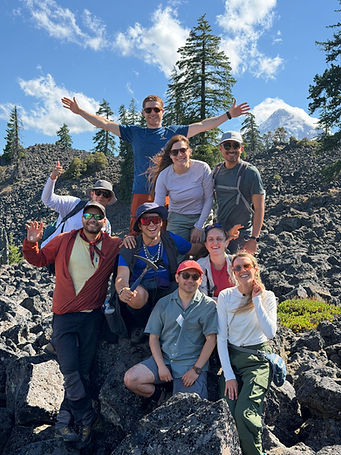
We finished on my favorite subject, fluvial geomorphology, on a huge sediment fan holding a complex mix of everything from sand to washing-machine-sized boulders. This is also where we spent our last two days, completing a coordinated team effort of pebble counting more than 20 transects and GPS work for a drone survey. It was slow going through sand under hot sun, but it also gave me a new appreciation for sunscreen and glacier freeze flavored Gatorade. I'm sharing this photo from the sediment fan because it shows our group, including one of the people who wrote the grant that made this trip possible, sharing what needed to go into this postcard, no less. It made me think about what it means to carve out time from busy lives for this and the importance of shared experiences to build collaborations. What I'll remember most is the people I met here. I can't wait to synthesize the data together and build collaborations.
.jpeg)
Nati Bergman
Research fellow
University of Haifa
Hi,
I was a visiting professor from Israel at Portland State University (PSU) during 2023-2024. While at the department of geology, I attempted to establish a collaborative effort between Portland State, USGS and US Forest Service regarding work around Mount Hood geohazards. Specifically, looking at large scale sediment transport processes on Eagle Creek (in the Columbia Gorge) and the White River sandur on the southern flank of the volcanic mountain. I did not succeed in creating collaborative projects despite substantial personal funding and I had to establish the two gauging stations by myself with the help of several PSU faculty members.
SZ4D field trip changed those two solo research projects. For the first time, I was able to contact the right people in the USGS, OSU, UO and two out of state (Oregon) universities and finally find the professional connections and logistical support for those projects. Furthermore, SZ4D field trip allowed me to calibrate the White River gauging station and monitor the 2004 lahar that is threatening the large bridge above Highway 35 and the Tygh Valley agricultural community and Warm Springs Reservation downstream.
Sincerely,
Nati
.jpg)